What Exterior Peeling Paint May Be Telling You
Exterior paint peeling usually signals moisture, weak surface preparation, incompatible coatings, or normal wear. PainterSammamishwa.com checks the paint layers, siding, trim, and nearby moisture paths before recommending scraping, repairs, and repainting.
Get a Free EstimateWhat Exterior Paint Usually Means
Exterior paint peeling usually means the coating has lost adhesion or the surface has trapped moisture.
Paint adhesion is the bond between the paint film and the surface below it. Wood siding, fiber cement siding, and trim can all peel when water reaches the substrate or when surface preparation was incomplete.
We check the failing layers, nearby joints, and surface condition before choosing a repair. That inspection helps us separate normal wear from a deeper coating failure.
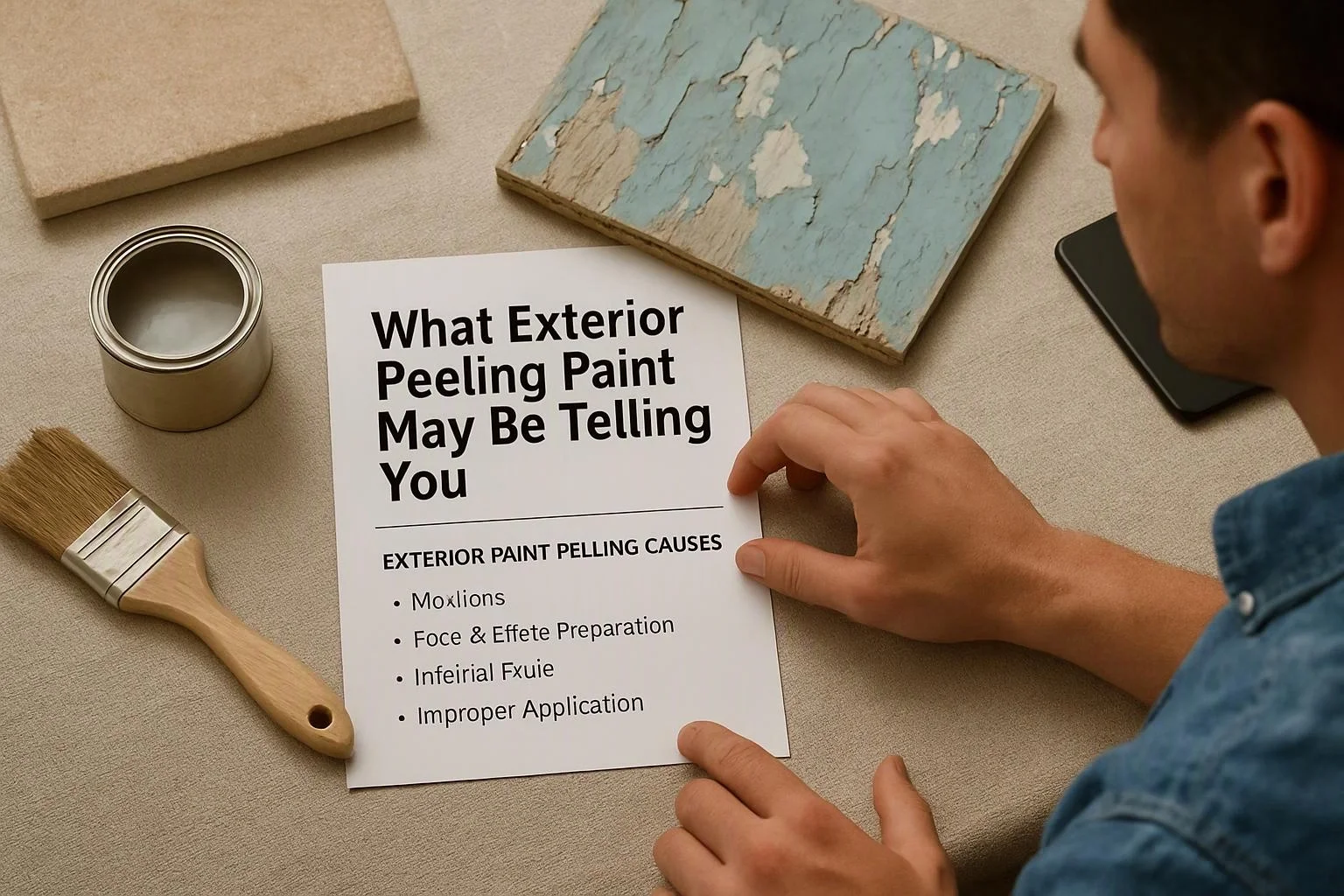
Signs Your Exterior Paint Has a Deeper Problem
Visible paint changes can show whether the problem involves moisture, weak bonding, or substrate damage. We use these signs to guide a closer inspection.
Common Causes of Peeling Exterior Paint
The most common causes are moisture, inadequate preparation, incompatible coatings, and weathered or damaged siding. We trace the likely moisture source before planning the coating repair.
What Peeling Patterns Can Tell You
Peeling location often points toward the moisture path or preparation problem. We compare the pattern with nearby joints, edges, and drainage details.
| Peeling pattern | What it may suggest | What we check |
|---|---|---|
| Peeling around eaves | Water movement near the roof edge or poor ventilation | Roof drainage, flashing, and exposed edges |
| Peeling around trim | Open caulk joints or water entering at the edge | Trim joints, seals, and the bond between materials |
| Peeling at siding joints | Movement, failed sealant, or moisture behind the joint | Joint condition and nearby siding damage |
| Peeling near windows | Water around the window frame or trim | Window trim, flashing, and caulk |
| Widespread peeling | Broad preparation failure, coating failure, or weather exposure | Paint layers and the overall substrate |
| Localized peeling | A focused moisture path or damaged area | The surrounding joint, surface, and drainage route |
Why Paint Peels Around Eaves, Trim, and Windows
Paint around eaves and trim often peels because water reaches joints, edges, or poorly sealed surfaces.
Eaves sit near the roof edge, where runoff can reach painted surfaces. Window trim and door trim also contain joints that move and need sound caulk.
We check flashing, caulk joints, and signs of gutter overflow before repainting these areas. A small drainage or sealing problem can cause repeated edge peeling if the source stays active.
Should Peeling Exterior Paint Be Scraped Before Repainting?
Yes, loose and failing paint should be removed before repainting so the new coating can bond to a sound surface.
Paint scraping removes loose paint, while surface sanding smooths rough edges around the repair. We inspect the exposed substrate before deciding whether spot repairs, primer, or deeper paint removal is needed.
Painting over lifting paint can trap defects under the new coat. Our crew removes unstable material and prepares the surface for a stronger finish.
How We Prepare a Surface That Has Peeling Paint
Our surface preparation process connects the visible peeling paint to its underlying cause. Each step helps protect the new coating from early failure.
We explain the work included in the estimate, including surface repairs and coating needs. Free Estimates Available.
How to Help Prevent Exterior Paint from Peeling
Good maintenance helps keep moisture out and supports lasting paint adhesion. We focus on the conditions that affect the paint film and the siding beneath it.
When Peeling Paint Needs More Than a Touch-Up
Repeated or widespread peeling needs source inspection and surface repair before new paint is applied.
Siding damage, wood rot, and ongoing moisture damage can make a touch-up fail quickly. We open the affected area as needed, assess the substrate, and explain which repairs belong before repainting.
Our team can plan exterior house painting around the condition of the siding, trim, and existing paint layers. The estimate reflects the preparation needed for a sound finish.
Contact PainterSammamishwa.com to discuss peeling paint and request an estimate.
Get a Free EstimateQuestions About Exterior Peeling Paint
Can moisture cause exterior paint to peel?
Yes, moisture can cause exterior paint to peel when water reaches the paint film or substrate. PainterSammamishwa.com checks the likely moisture source, damaged joints, and affected siding before planning repairs.
Can I paint over peeling exterior paint?
No, painting over loose or failing paint usually leaves the adhesion problem in place. We remove unstable coating, smooth rough edges, inspect the substrate, and prime suitable areas before repainting.
Why does exterior paint peel after rain?
Exterior paint may peel after rain when water enters open joints, damaged trim, siding gaps, or other weak points. We follow the peeling pattern and inspect nearby eaves, windows, flashing, caulk, and gutters.
Does peeling paint always mean the siding needs replacement?
No, peeling paint doesn't always mean the siding needs replacement. We inspect for sound material, localized damage, wood rot, and repeated moisture problems before recommending scraping, repair, priming, or repainting.