
What Is Feathering?
Feathering is a drywall finishing method that spreads joint compound beyond a repair or seam. The compound becomes thinner toward the surrounding surface, which softens the edge and reduces visible ridges. Painters and drywall finishers use feathering to create a smoother transition before sanding, priming, texturing, or painting.
Quick Facts About Feathering
Category
Drywall finishing method
Used for
Blending repairs and seams
Applies to
Joint compound and textured drywall
Common confusion
Not the same as sanding
Also called
Feather edge, Blending
Often discussed with
Drywall Texturing
Key Takeaways About Feathering
- The compound thins gradually at the repair's outer edge.
- A wide transition helps hide raised seams and patches.
- Feathering isn't the same as sanding or texturing.
How Feathering Works
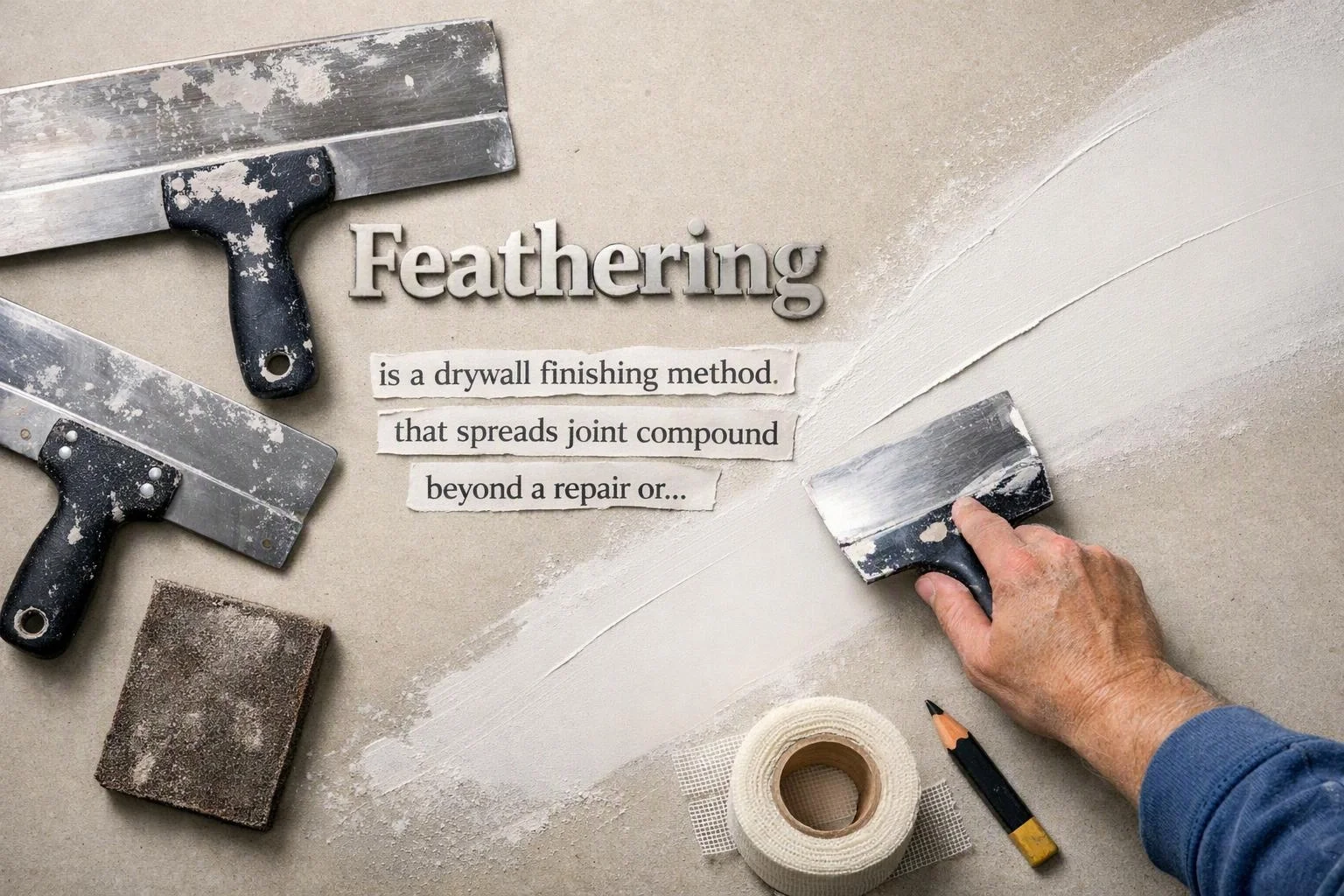
Feathering spreads joint compound past a patch, joint, or filled hole. The finisher presses the compound thinner as the tool moves away from the repair. This creates a gradual slope instead of a sharp ridge.
Related glossary terms: Drywall Joint Compound, Sanding Sponge, Surface Preparation.
A drywall knife or taping knife controls the compound's edge. The work may include more than one coat, with sanding between coats when needed. After the surface is prepared, texture matching can help the repaired area fit the surrounding ceiling or wall.
Feathering also helps prepare a surface for primer and paint. A patch with a hard edge can show through the final finish, especially under side lighting.
From the PainterSammamishwa.com team
When we prepare textured drywall, we spread compound beyond the damaged area and check the transition from several angles. We also look for tool marks, raised edges, and changes that could remain visible after priming and texture application.
Feathering in Practice: A Real-World Example
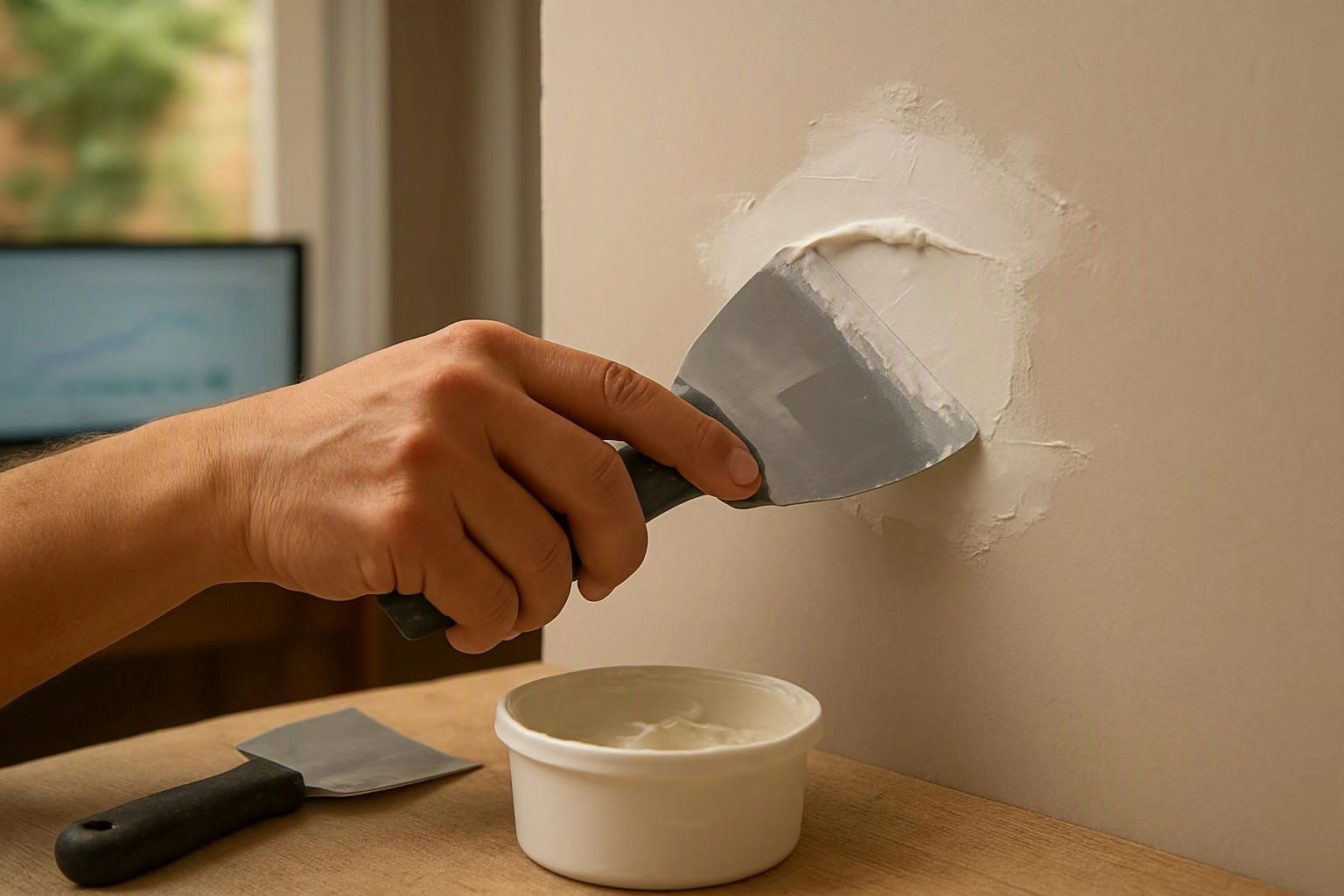
A wall has a filled hole near a window. We feather the joint compound outward, sand the transition, and match the nearby drywall texture before painting.
Related Services
Related Terms
Drywall Joint Compound
Drywall Joint Compound is a spreadable material that fills seams, screw holes, and surface gaps in…
Sanding Sponge
A sanding sponge is a flexible abrasive block used to smooth wood, drywall compound, and painted…
Surface Preparation
Surface Preparation is the cleaning, repair, and conditioning of a surface before paint or coating is…
Texture Matching
Texture Matching is the process of reproducing an existing wall or ceiling surface pattern on a…
PainterSammamishwa.com
Have Questions About Feathering?
Contact PainterSammamishwa.com for practical guidance on Feathering and related painting contractor work in Sammamish.