
What Is a Sanding Sponge?
A sanding sponge is a flexible abrasive block used to smooth wood, drywall compound, and painted surfaces. Its foam core helps the abrasive follow edges, corners, and light curves. Painters use sanding sponges during surface preparation to remove rough spots, soften filler edges, and create a cleaner surface before primer or paint.
Quick Facts About Sanding Sponge
Category
Surface preparation tool
Used for
Smoothing wood, filler, and painted surfaces
Common confusion
Not a household cleaning sponge
Also called
Sanding block
Often discussed with
Baseboard Installation
Key Takeaways About Sanding Sponge
- Its flexible shape follows edges and light curves.
- Use it to smooth filler and rough paint areas.
- A sanding sponge is not the same as a cleaning sponge.
How Sanding Sponge Works
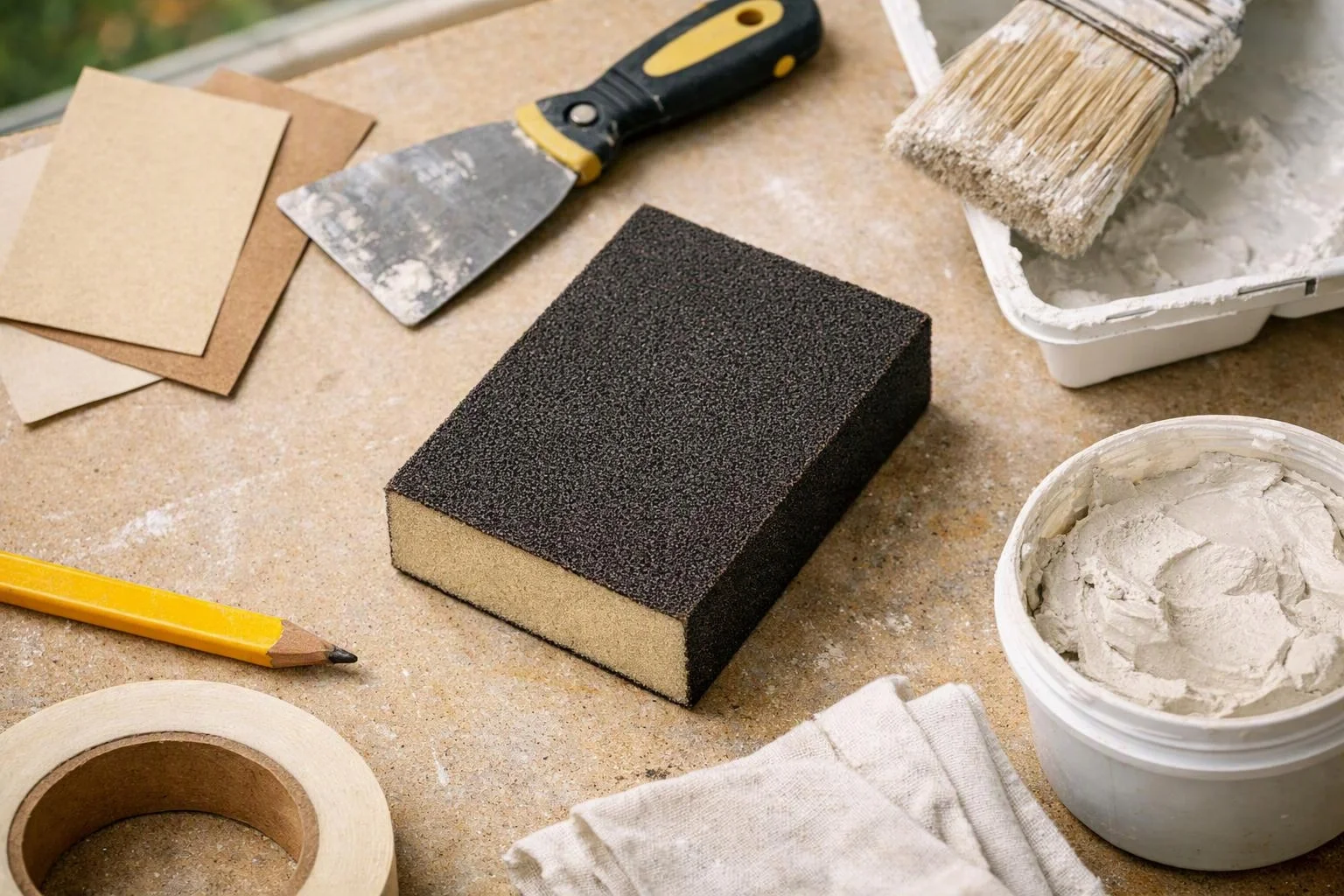
A sanding sponge uses abrasive material bonded to a flexible foam core. Rubbing the sponge across a surface removes small high spots and softens rough edges. The foam helps the abrasive stay in contact with corners and shaped areas.
Related glossary terms: Surface Preparation, Wood Filler, Spackle.
Different abrasive grades suit different tasks. A coarser surface removes visible ridges or leftover material. A finer surface smooths the area before primer or paint. Painters often brush away dust after sanding, because loose dust can weaken the next coating.
Where It Fits in Baseboard Work
Baseboard preparation may include sanding wood filler, cut ends, or old paint edges. The sponge works well along profiles where a flat sanding sheet may crease or miss the surface. Sanding should stop when the area feels even and looks ready for coating.
From the PainterSammamishwa.com team
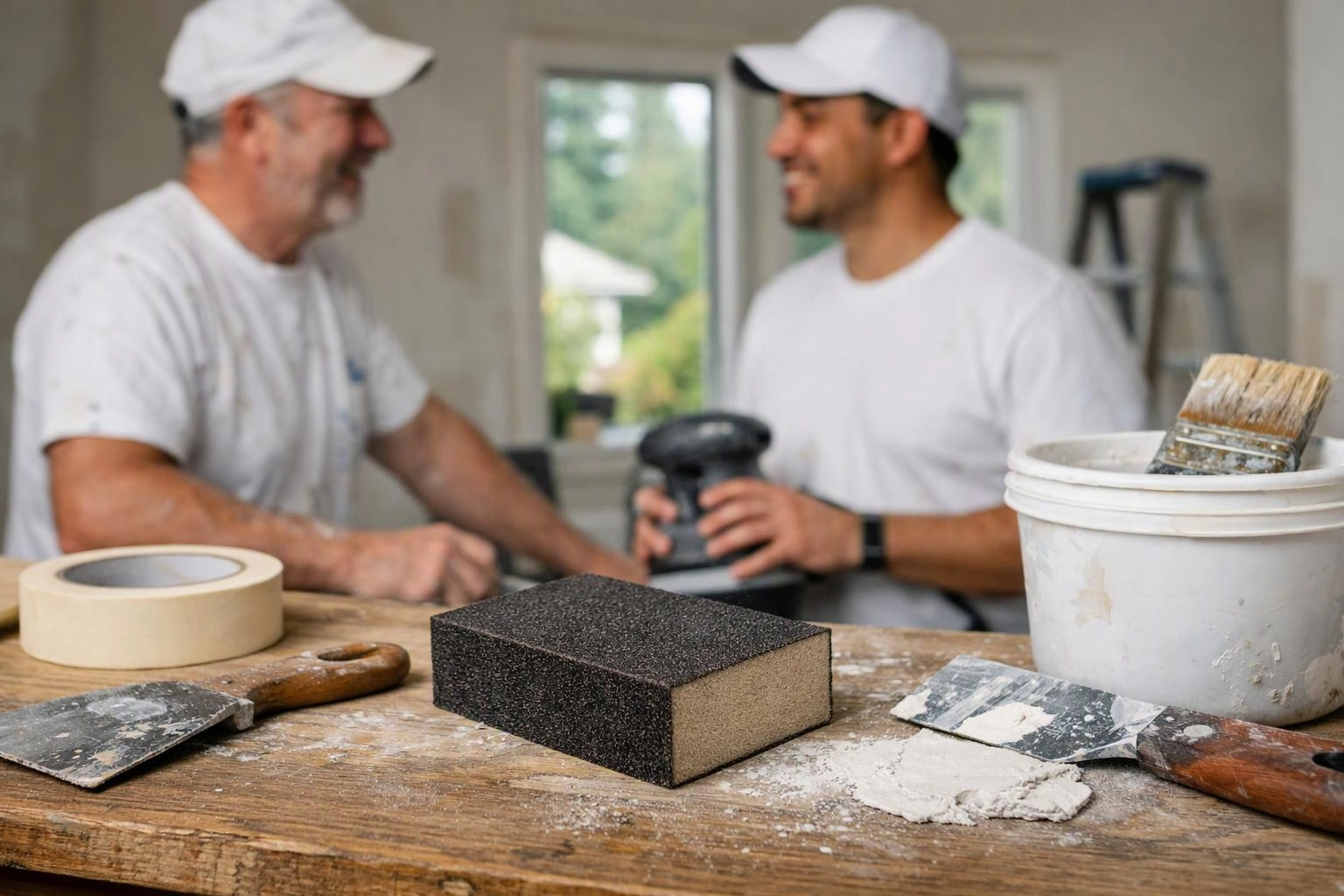
When we prepare baseboards, we choose a sanding sponge that matches the surface and the repair material. We use light pressure around profiles and corners, then remove sanding dust before primer or paint. Our team checks the surface by sight and touch so small ridges do not show through the finish.
Sanding Sponge in Practice: A Real-World Example
During baseboard installation, a painter can use a sanding sponge to smooth wood filler over nail holes and joints. The flexible block follows the trim profile and leaves the repaired areas ready for primer.
Related Terms
Surface Preparation
Surface Preparation is the cleaning, repair, and conditioning of a surface before paint or coating is…
Wood Filler
Wood Filler is a repair compound that fills small holes, cracks, dents, and gaps in wood…
Spackle
Spackle is a lightweight patching compound that fills small holes, dents, and surface cracks in drywall…
Primer
Primer is a preparatory coating applied before paint to condition a surface. It helps paint bond…
PainterSammamishwa.com
Have Questions About Sanding Sponge?
Contact PainterSammamishwa.com for practical guidance on Sanding Sponge and related painting contractor work in Sammamish.