
What Is Tannin Bleed?
Tannin Bleed is a brown, yellow, or reddish stain that moves from wood into a paint or stain film. The stain comes from natural compounds called tannins, which are common in cedar, redwood, and other woods. Moisture can draw tannins toward the surface and leave discolored marks through a new coating.
Quick Facts About Tannin Bleed
Category
Wood coating problem
Used for
Diagnosing stains under paint
Common confusion
Mistaken for surface dirt or mildew
Also called
Tannin staining, Wood Tannin Bleed
Often discussed with
Fence Painting
Key Takeaways About Tannin Bleed
- It often appears as brown or yellow discoloration.
- Moisture can pull wood tannins into the coating.
- Tannin bleed is not the same as peeling paint.
How Tannin Bleed Works
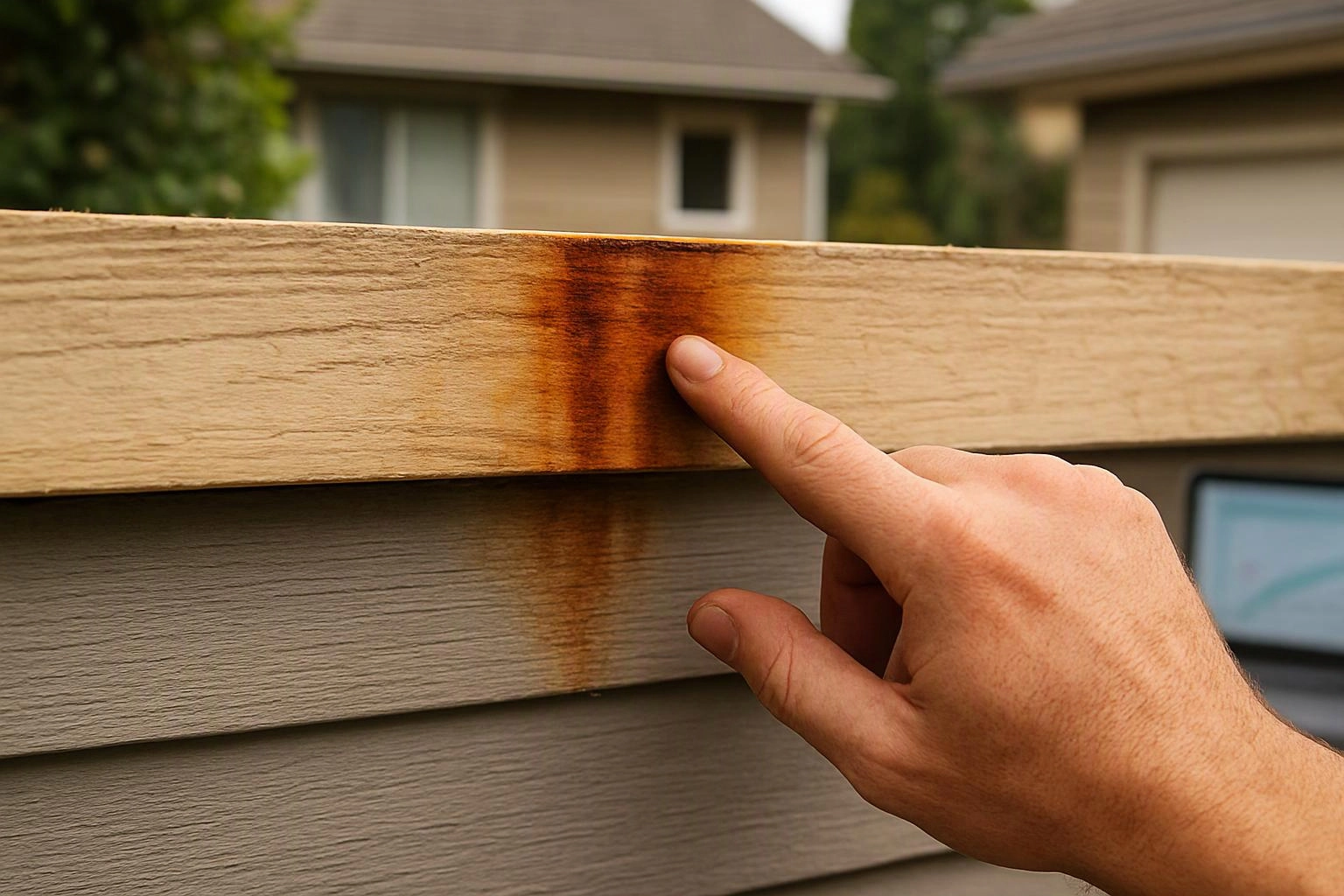
Tannin Bleed happens when natural wood compounds move into a coating and change its color. Cedar and redwood often contain more tannins, so their boards can show brown, amber, or reddish marks after painting.
Related glossary terms: Primer, Surface Preparation, Penetrating Stain.
Moisture can carry tannins toward the wood surface. The marks may follow knots, end grain, fasteners, or board areas that absorb water. A regular finish coat may not block the movement, so a stain-blocking primer is often part of the repair process.
On a fence, the visible stain may appear after the surface looks dry and evenly coated. A painter checks the wood, removes loose material, allows the surface to dry, and chooses a coating system that helps isolate the tannins. The finish coat then provides the desired color and sheen.

From the PainterSammamishwa.com team
When we inspect a fence, we look for stains near knots, end grain, and areas that hold moisture. We prepare the surface, allow damp wood to dry, and select a primer that helps block tannin movement before applying the finish.
Tannin Bleed in Practice: A Real-World Example
A cedar fence receives a light-colored coating, but brown marks later appear around several knots. The painter treats those areas with a stain-blocking primer before applying the finish coat.
Related Services
Related Terms
Primer
Primer is a preparatory coating applied before paint to condition a surface. It helps paint bond…
Surface Preparation
Surface Preparation is the cleaning, repair, and conditioning of a surface before paint or coating is…
Penetrating Stain
A penetrating stain is a wood coating that soaks into the surface instead of forming a…
Film Thickness
Film Thickness is the depth of a coating layer after application or drying. Painters measure it…
PainterSammamishwa.com
Have Questions About Tannin Bleed?
Contact PainterSammamishwa.com for practical guidance on Tannin Bleed and related painting contractor work in Sammamish.