
What Is Efflorescence?
Efflorescence is a white, powdery salt deposit that forms on masonry when moisture carries dissolved minerals to the surface. As the water evaporates, the minerals remain behind. The deposit often appears on brick, concrete, or mortar and can affect paint adhesion if the moisture source continues.
Quick Facts About Efflorescence
Category
Masonry surface deposit
Used for
Identifying moisture-related surface residue
Common confusion
Mold or paint failure
Also called
Salt deposits
Often discussed with
Brick Painting
Key Takeaways About Efflorescence
- It appears as a white, powdery deposit on masonry.
- Moisture must be addressed before brick receives paint.
- It is not the same as mold or peeling paint.
How Efflorescence Works
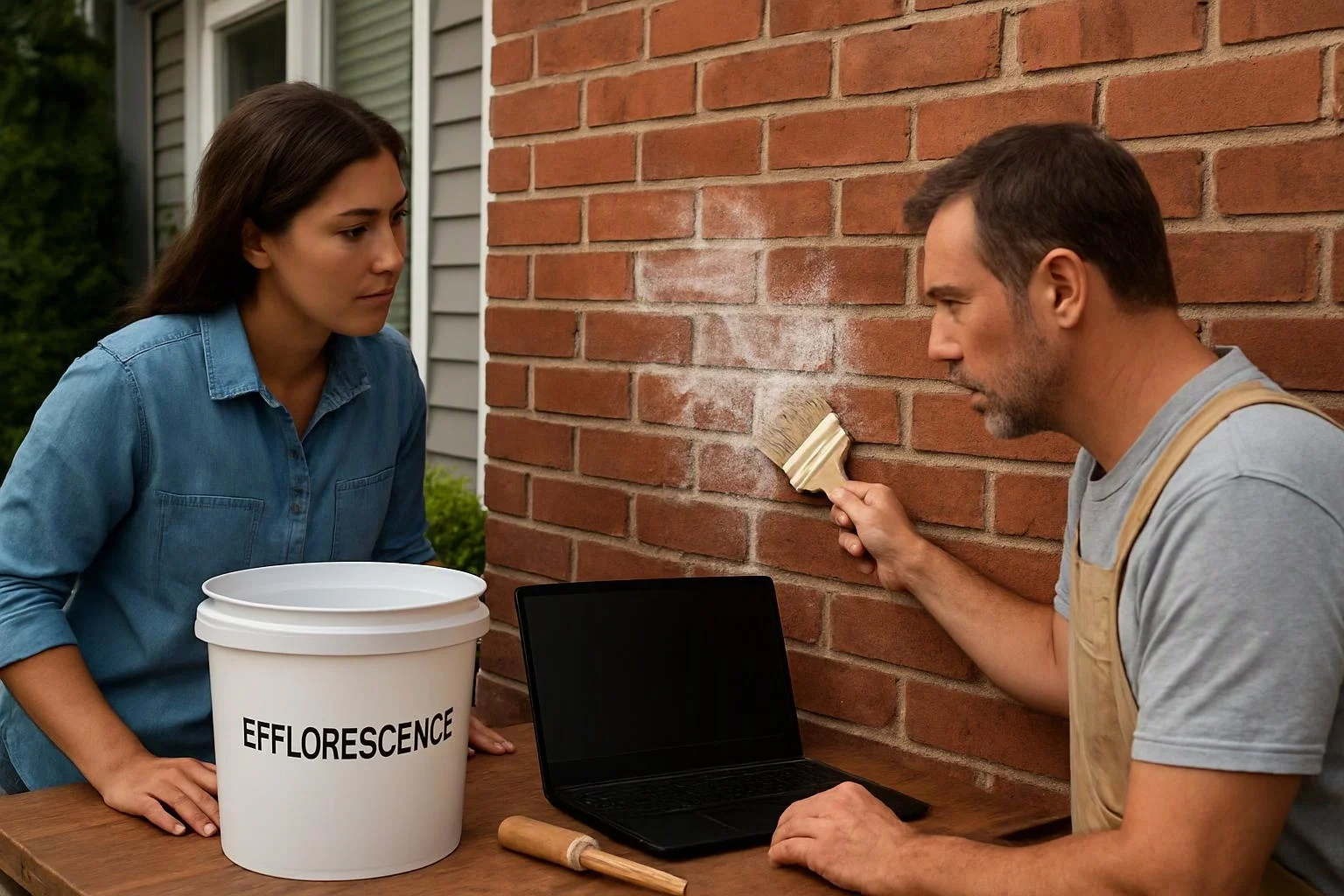
Efflorescence forms when water moves through porous masonry and dissolves salts inside the material. The water reaches the surface, then evaporates and leaves the salts behind. White streaks, spots, or a light crust may appear on brick and mortar.
Related glossary terms: Surface Preparation, Paint Adhesion, Primer.
The deposit can be brushed away for inspection, but surface cleaning alone may not solve the problem. Ongoing moisture can bring more salts to the surface and weaken the bond between brick and paint. Painters check for water entry, damp areas, and loose residue during surface preparation.
Efflorescence and Brick Painting
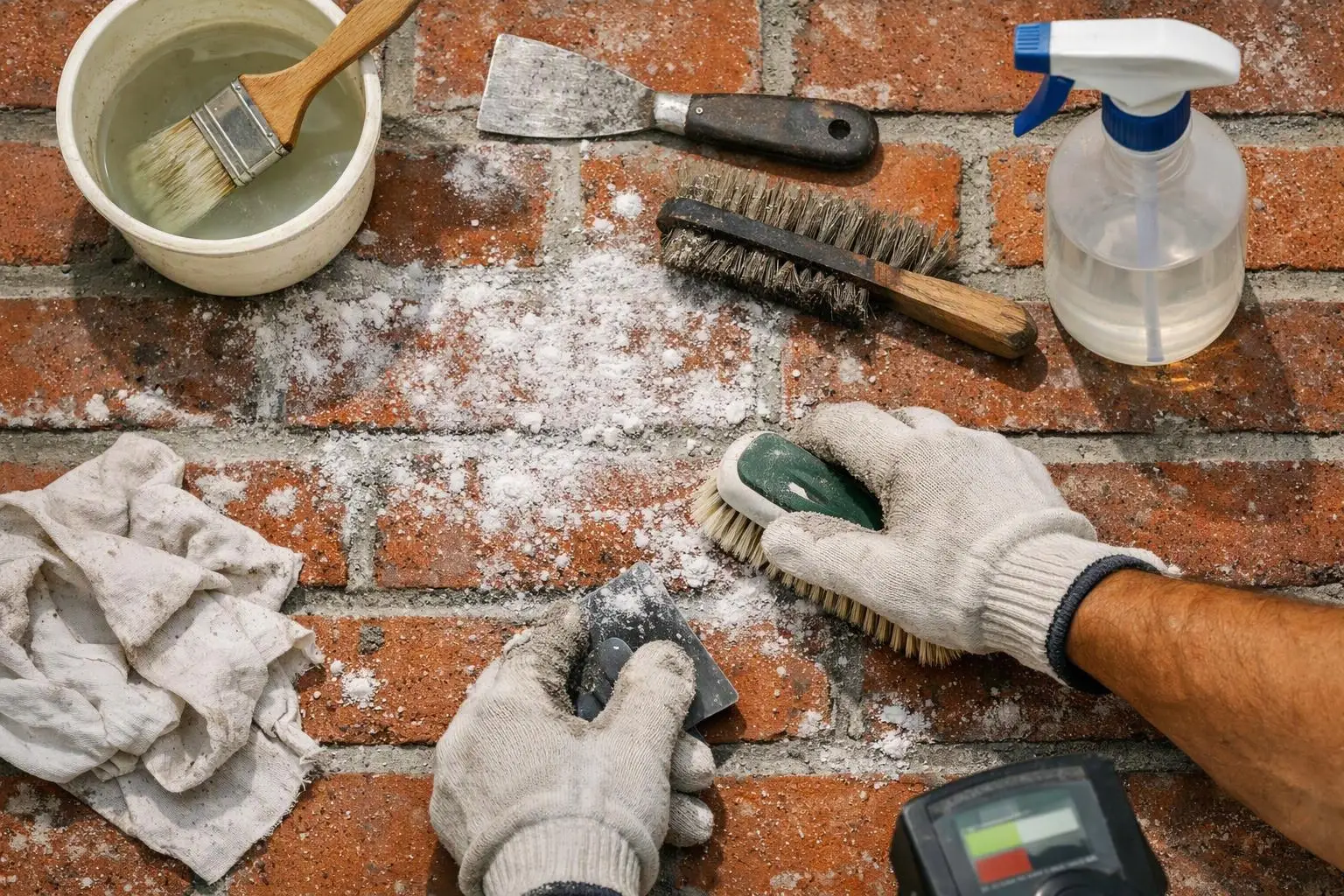
Brick needs a clean, dry surface before coatings are applied. A painter may remove loose deposits, allow the masonry to dry, and address surface conditions before priming. The correct preparation depends on the amount of residue and the condition of the brick.
From the PainterSammamishwa.com team
When we inspect brick for efflorescence, we look for powdery residue, damp areas, and paths where water may enter. We clean loose deposits and check the surface before applying primer or paint. We also watch for conditions that could bring the residue back through the coating.
Efflorescence in Practice: A Real-World Example
A brick exterior may show white, chalky streaks beneath a window or along a mortar joint. Before brick painting, the surface needs inspection and preparation so loose salts do not interfere with the coating.
Related Services
Related Terms
Surface Preparation
Surface Preparation is the cleaning, repair, and conditioning of a surface before paint or coating is…
Paint Adhesion
Paint Adhesion is the bond that keeps a paint film attached to a surface. Good adhesion…
Primer
Primer is a preparatory coating applied before paint to condition a surface. It helps paint bond…
Peeling Paint
Peeling paint is a coating failure in which paint lifts, cracks, curls, or separates from the…
PainterSammamishwa.com
Have Questions About Efflorescence?
Contact PainterSammamishwa.com for practical guidance on Efflorescence and related painting contractor work in Sammamish.