
What Is Caulk?
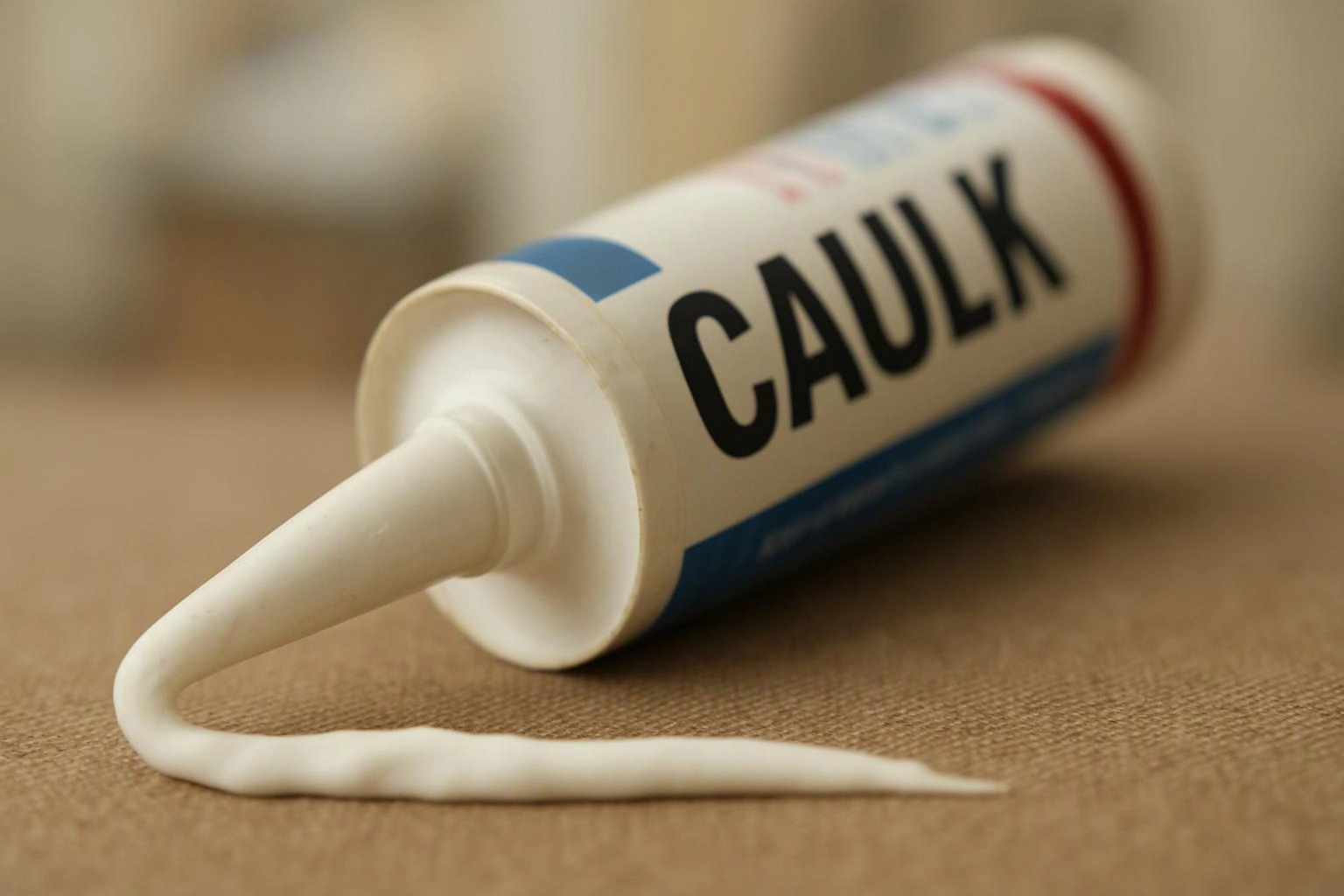
Caulk is a flexible material that seals narrow gaps and joints where building surfaces meet. It blocks drafts, moisture, dust, and light while allowing small amounts of movement. Painters often apply caulk around trim, molding, baseboards, windows, and doors before painting to create a cleaner, more finished edge.
Quick Facts About Caulk
Category
Flexible joint sealant
Used for
Trim gaps and surface joints
Common confusion
Often confused with spackle
Also called
Painter's caulk, Sealant
Often discussed with
Crown Molding Installation
Key Takeaways About Caulk
- Caulk stays flexible as connected surfaces shift slightly.
- A smooth bead helps paint flow across trim joints.
- Caulk is not the same as drywall joint compound.
How Caulk Works

Caulk fills a narrow joint between connected surfaces. The material forms a continuous bead that follows the gap. Its flexible texture helps the joint handle small movement without opening right away.
Related glossary terms: Cure Time, Drywall Joint Compound, Surface Preparation.
A caulk gun applies the material in a controlled line. A damp finger or smoothing tool shapes the bead and removes extra material. After the caulk cures, painters can coat compatible products with paint. Crown molding often needs caulk where the molding meets the wall or where two pieces join. The finished bead hides small gaps and gives the trim a cleaner line.
Caulk works best on sound, clean surfaces. The joint must be free of loose material, dust, and old sealant that could block adhesion.
From the PainterSammamishwa.com team
When we install crown molding, we check each joint and wall connection before painting. We apply a neat bead, smooth it carefully, and inspect the surface after it cures. We also check that the caulk accepts the planned paint finish.
Caulk in Practice: A Real-World Example
During a crown molding installation, a small gap may appear where the molding meets the wall. We fill and smooth that joint with caulk before painting, so the transition looks even.
Related Terms
Cure Time
Cure Time is the period a coating needs to harden through chemical drying and bonding. The…
Drywall Joint Compound
Drywall Joint Compound is a spreadable material that fills seams, screw holes, and surface gaps in…
Surface Preparation
Surface Preparation is the cleaning, repair, and conditioning of a surface before paint or coating is…
Spackle
Spackle is a lightweight patching compound that fills small holes, dents, and surface cracks in drywall…
PainterSammamishwa.com
Have Questions About Caulk?
Contact PainterSammamishwa.com for practical guidance on Caulk and related painting contractor work in Sammamish.